
Many people mistake oily flakes for simple dry dandruff and respond by adding more moisturising oils. In reality, dandruff and seborrhoeic scaling are closely linked to excess sebum production and microbial imbalance rather than dryness alone. Research shows that dandruff is associated with shifts in both Malassezia yeast populations and bacterial communities on the scalp, particularly in sebaceous-rich environments (insert link here). Oily flakes represent a distinct presentation driven by excess sebum, altered microbial proportions, and disruption of the scalp's acidic environment. This guide explains what oily flakes are, why they develop, and how to address them using microbiome-conscious strategies designed to restore balance rather than impose long-term chemical suppression.
Table of Contents
- What Are Oily Flakes? Understanding Composition And Causes
- The Microbiome And Oily Dandruff: Why It Matters
- pH And Its Impact On Oily Flake Development
- Common Misconceptions About Oily Flakes
- Why Conventional Treatments Often Fail With Oily Flakes
- The Role Of pH And Product Frequency In Managing Oily Flakes
- Natural And Microbiome-Friendly Treatment Options
- Beyond Topical Treatment: A Holistic Framework For Lasting Scalp Balance
- Explore Microbiome-Friendly Solutions At Victory Serums
- Frequently Asked Questions About Oily Flakes
Key Takeaways
| Point | Details |
|---|---|
| Oily flakes differ fundamentally from dry dandruff | They contain dead skin cells mixed with excess sebum and microbial by-products, requiring targeted treatment approaches. |
| Microbiome imbalance drives oily flake formation | Malassezia yeast overgrowth increases by up to 70% in affected scalps, triggering inflammation and flaking. |
| Scalp pH critically affects flake development | Maintaining pH between 4.5 and 5.5 supports healthy microbiome, while pH above 6 increases inflammation by 30-40%. |
| Conventional treatments often create dependency | Daily chemical shampoos cause irritation in up to 60% of users and disrupt beneficial scalp microbes. |
| Natural microbiome-friendly solutions work effectively | Clinical trials show 60% symptom improvement within 4 weeks using compatible formulations. |
What Are Oily Flakes? Understanding Composition and Causes
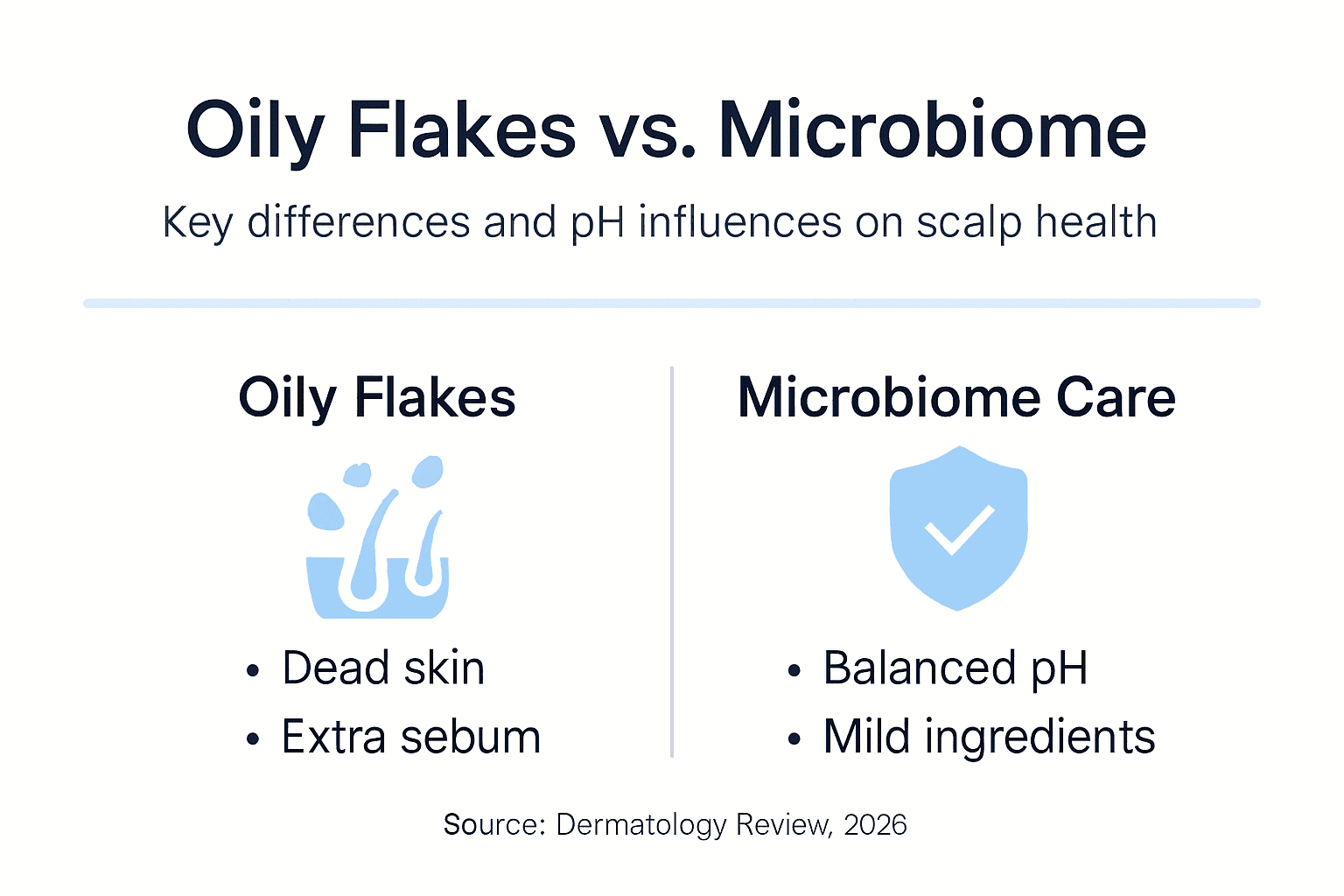
Oily flakes represent a distinct scalp condition characterised by dead skin cells bound together with excess sebum and metabolic by-products from scalp microorganisms. This combination creates a fundamentally different structure from dry dandruff. Unlike dry flakes that fall freely from the scalp, oily flakes adhere to both the scalp surface and hair strands due to their lipid-rich composition. The texture feels distinctly greasy or waxy to the touch, forming visible yellowish clumps that resist removal through standard shampooing routines.
Sebum production plays a central role in this condition. Research shows affected scalps produce 2 to 3 times more sebum than healthy scalps. This excess oil creates an environment where dead skin cells cannot shed normally. Instead, they accumulate in sticky clusters that trap bacteria and yeast, worsening the cycle.
Recognising the distinct characteristics of oily flakes prevents treatment mistakes:
- Oily flakes appear larger and yellowish, while dry flakes are small and white
- Oily flakes stick to scalp and hair, whereas dry flakes fall onto shoulders easily
- Oily flakes often accompany visible scalp redness and inflammation
- The scalp may feel greasy even shortly after washing
- Scratching produces sticky residue rather than dry powder
Accurate identification matters because using moisturising products designed for dry scalp will only make oily flakes worse. You need treatments that address sebum regulation and microbiome balance, not additional hydration.
The Microbiome and Oily Dandruff: Why It Matters
Your scalp hosts billions of microorganisms that normally exist in a balanced microbial ecosystem. When this balance is disrupted, certain organisms can proliferate beyond healthy levels. Research consistently shows that Malassezia species are significantly more abundant on dandruff-affected scalps compared with healthy controls, supporting the role of microbial overgrowth in dandruff pathogenesis.
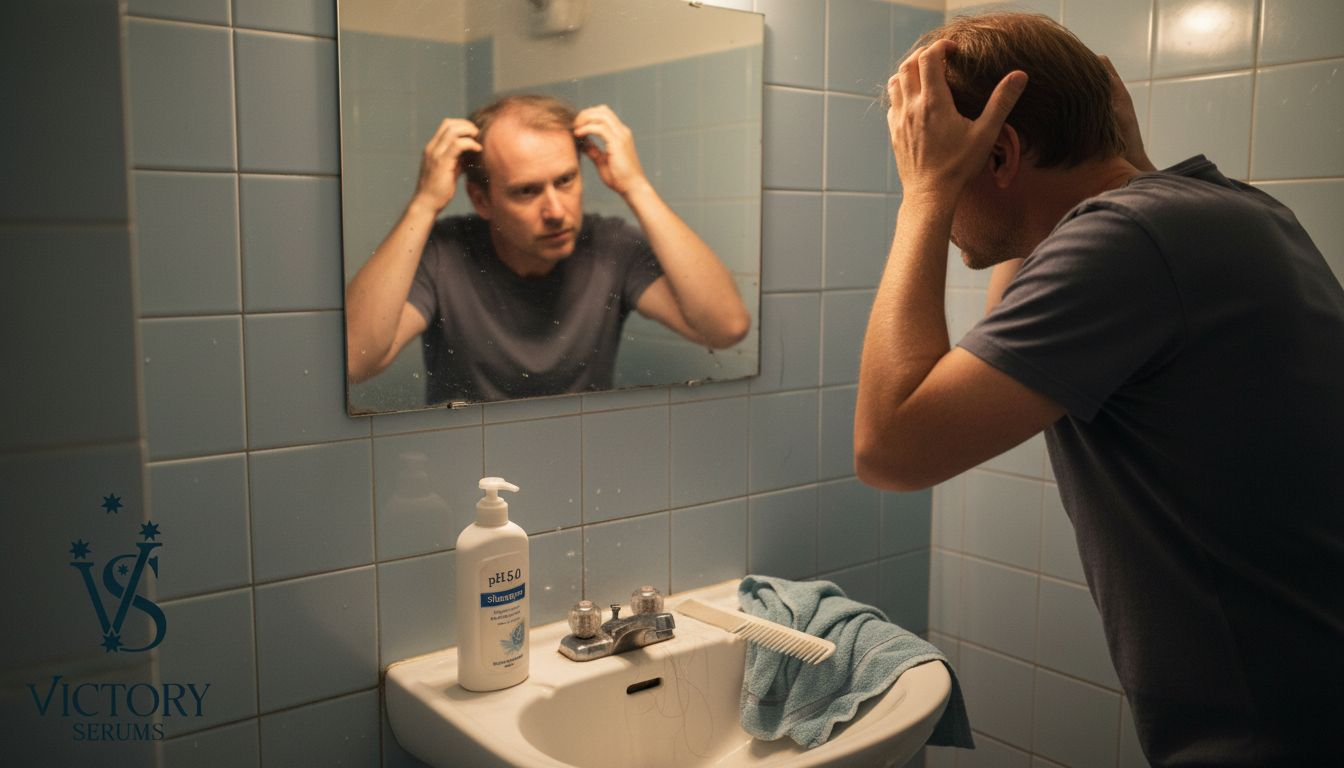
Malassezia yeast feeds on sebum, breaking it down into fatty acids that irritate the scalp. This triggers an inflammatory response that accelerates skin cell turnover. Your scalp tries to shed irritated cells faster, but excess sebum glues them together into visible oily flakes. The inflammation also signals sebaceous glands to produce even more oil, creating a self-perpetuating cycle.
Microbial imbalance damages the scalp's protective barrier in multiple ways:
- Beneficial bacteria that normally crowd out harmful species decline in number
- Yeast metabolites disrupt the lipid layer that seals moisture and protects against irritants
- Inflammation weakens tight junctions between skin cells
- The compromised barrier becomes more sensitive to environmental triggers
Restoring microbiome balance addresses the root cause rather than just suppressing symptoms. This approach allows beneficial microbes to recolonise and naturally control problematic yeast populations. The result is lasting relief that improves over time rather than requiring constant intervention.
Pro Tip: When choosing scalp treatments, look for products labelled as microbiome-friendly or probiotic-compatible. These formulations support beneficial microbes while controlling problematic overgrowth, avoiding the scorched-earth approach of harsh antimicrobials that kill everything indiscriminately.
pH and Its Impact on Oily Flake Development
Scalp pH functions as a critical environmental regulator for microbial communities and skin barrier health. The optimal scalp pH is 4.5 to 5.5, creating a slightly acidic environment that favours beneficial bacteria while limiting pathogenic yeast growth. This acidic range also activates enzymes necessary for proper lipid formation in the protective skin barrier
When scalp pH rises above 6, multiple problems emerge. pH above 6 increases inflammation by 30 to 40% compared to optimal acidic conditions. The skin barrier becomes more permeable, allowing irritants to penetrate more easily. Malassezia yeast thrives in less acidic environments, accelerating its population growth and metabolic activity.
Many conventional shampoos have alkaline pH levels between 7 and 9. Daily use gradually shifts the scalp towards a more alkaline state, disrupting natural defences. This explains why frequent washing with typical shampoos often fails to control oily flakes despite removing visible sebum.
Targeted treatments formulated at slightly higher pH around 6 can be effective when used strategically:
- Apply pH 6 serum only during active flare-ups, typically once weekly
- Use minimal product volume to avoid prolonged pH elevation
- Allow scalp to naturally return to acidic pH between treatments
- Transition to maintenance products with pH below 5 as symptoms improve
- Monitor scalp response and adjust frequency based on flaking patterns
The following table compares pH approaches for oily flake management:
| Product Type | pH Level | Frequency | Impact |
|---|---|---|---|
| Standard Shampoo | 7-9 | Daily | Disrupts barrier, encourages dependency |
| Intensive Serum | ~6 | Weekly | Rapid symptom control with minimal disruption |
| Maintenance Products | <5 | As needed | Supports long-term scalp health and balance |
Pro Tip: After applying any scalp treatment, resist the urge to wash it out immediately unless instructed. Letting active ingredients work for several minutes or as a leave-in treatment maximises effectiveness while using less product overall.
Common Misconceptions About Oily Flakes
The confusion between oily flakes and dry dandruff causes significant treatment failures. Misclassification of oily flakes leads to ineffective moisturising product use in 40% of cases. People see flakes and assume their scalp needs more moisture, applying heavy oils or moisturising shampoos that worsen the underlying sebum problem.
This myth persists because mainstream beauty advice rarely distinguishes between scalp conditions. Marketing messages promote hydration as a universal solution, ignoring the reality that different flake types need opposite approaches. Adding moisture to an already oily scalp feeds the microbial overgrowth and increases flake formation.
Several other misconceptions prevent effective oily flake management:
- Washing more frequently will control oiliness and flakes (actually strips natural oils, triggering rebound sebum production)
- All anti-dandruff shampoos work the same way (different active ingredients target different mechanisms with varying effectiveness)
- Oily flakes mean poor hygiene (they result from metabolic and microbial factors unrelated to cleanliness)
- You must use anti-dandruff products daily forever (this creates dependency rather than resolving underlying imbalance)
- Natural treatments cannot match pharmaceutical effectiveness (evidence shows comparable or superior long-term outcomes)
Understanding these distinctions helps you avoid products and routines that seem logical but actually perpetuate the problem. The goal is not to control symptoms indefinitely with daily intervention but to restore the conditions where your scalp naturally regulates itself.
Why Conventional Treatments Often Fail With Oily Flakes
Most anti-dandruff shampoos rely on antimicrobial chemicals like zinc pyrithione, selenium sulphide, or ketoconazole to suppress microbial activity. These ingredients work rapidly to reduce visible flaking, creating the impression of effectiveness. However, they also eliminate beneficial bacteria that naturally compete with problematic yeast species.
The collateral damage to healthy microbiome populations creates several problems. First, it removes the natural defence system that would normally keep Malassezia in check. Second, harsh chemicals often irritate the scalp, triggering inflammation that increases cell turnover. Up to 60% of users report irritation from daily chemical shampoos, leading to a dependency cycle where stopping the product causes immediate symptom return.
Conventional treatments fail to address root causes:
- They suppress symptoms without correcting microbiome imbalance
- Daily use prevents the scalp from re-establishing natural regulatory mechanisms
- Chemical irritation perpetuates the inflammation-flaking cycle
- The scalp becomes dependent on continuous chemical intervention to function normally
Many people notice that anti-dandruff shampoos work well initially but become less effective over time. This happens because continued disruption of the scalp ecosystem selects for more resistant microbial strains while depleting beneficial species. The treatment itself becomes part of the problem.
Breaking this cycle requires a different approach focused on minimal intervention that supports rather than replaces natural scalp function. You need to create conditions where beneficial microbes can recolonise and where the scalp barrier can repair itself without constant chemical interference.
The Role of pH and Product Frequency in Managing Oily Flakes
Strategic use of pH-balanced products with minimal application frequency offers a path out of chemical dependency. Weekly use of a serum formulated at pH 6 can reduce flaking by 50% within 1 to 2 weeks while allowing the scalp to maintain its natural regulatory capacity between applications.
This approach differs fundamentally from daily suppression strategies. By applying treatment only during active flare-ups, you give beneficial microbes time to recolonise between interventions. The scalp gradually re-establishes its optimal acidic pH naturally rather than being held in an artificially altered state. Using minimal product volume further reduces chemical load and associated irritation.
The following comparison illustrates different treatment philosophies:
| Approach | Frequency | Volume | pH Focus | Outcome |
|---|---|---|---|---|
| Daily Chemical Shampoo | Every day | High | Ignored | Temporary suppression, dependency |
| Weekly pH 6 Serum | Once weekly | Minimal | Strategic | Rapid relief, preserved function |
| Low pH Maintenance | As needed | Very low | Optimal | Long-term balance, independence |
Implementing this strategy requires a structured approach:
- Start with weekly application of targeted serum during active flare-ups
- Apply only to affected areas using minimal product volume
- Monitor flaking reduction over 1 to 2 week periods
- Gradually extend time between applications as symptoms improve
- Transition to low pH maintenance products once control is achieved
- Continue reducing product frequency as scalp self-regulation improves
Pro Tip: Track your treatment applications and flaking patterns in a simple log. This data helps you identify the minimum effective frequency for your scalp, allowing you to use less product over time rather than more. Most people can reduce application frequency by 50 to 75% within 12 weeks while maintaining symptom control.
Natural and Microbiome-Friendly Treatment Options
Modern dandruff research increasingly recognises that the condition is not simply the presence of Malassezia, but a disruption in the balance between fungal and bacterial communities on the scalp. Large-scale sequencing studies demonstrate that dandruff is associated with measurable microbial disequilibrium rather than the mere existence of yeast. This reinforces the importance of restoring ecological balance instead of relying solely on continuous suppression.
Zinc PCA is frequently positioned as a gentler antimicrobial and sebum-regulating active. In appropriate concentrations it can reduce excess oil availability and help limit yeast proliferation. The limitation is not the molecule itself but the delivery model. When incorporated into daily-use shampoos, even mild actives are repeatedly applied for years. Over time this creates ongoing microbial pressure and cumulative chemical exposure, keeping the scalp in a controlled state rather than allowing natural regulatory recovery.
Victory Serums approaches this differently. The objective is strategic intervention, not perpetual suppression. Intensive, low-frequency application reduces overall chemical load while allowing the scalp's barrier function and microbial populations time to stabilise between treatments. The focus shifts from symptom control to environmental correction.
Fermentation-derived ingredients and microbiome-supportive compounds are used to help reinforce this recovery phase. These ingredients support barrier integrity and create conditions less favourable to pathogenic overgrowth without imposing constant antimicrobial stress.
Additional supportive components may include:
- Zinc PCA used in controlled, intermittent applications
- Botanical extracts with anti-inflammatory activity such as green tea polyphenols
- Willow bark derivatives for gentle desquamation
- Low molecular weight hyaluronic acid for hydration without occlusion
- pH-adjusted systems formulated below pH 5 to preserve the acid mantle
Formulation pH remains critical. The scalp's natural pH typically ranges between 4.5 and 5.5. Maintaining this acidity supports lipid-processing enzymes required for barrier repair and discourages excessive yeast proliferation. An acidic environment allows active ingredients to function effectively while protecting microbial equilibrium.
 Over time, microbiome-conscious strategies aim to reduce treatment frequency rather than lock users into daily dependency. As barrier integrity improves and microbial proportions rebalance, product use can often decrease while maintaining symptom stability.
Beyond Topical Treatment: A Holistic Framework for Lasting Scalp Balance
Topical treatments address local scalp conditions, but lasting relief requires considering whole-body factors that influence scalp microbiome health. The connection between gut health and scalp stability reveals how systemic inflammation and microbial imbalances affect skin throughout the body, including the scalp.
Diet influences sebum composition and inflammatory responses. Foods high in refined sugars and processed oils can increase sebum production and alter its fatty acid profile, potentially feeding Malassezia overgrowth. Conversely, fermented foods containing beneficial bacteria may support scalp microbiome balance through gut-skin communication pathways.
A comprehensive 12-week program addressing multiple factors yields superior long-term results. This structured approach combines targeted topical care with dietary adjustments and lifestyle modifications that support natural scalp regulation. Clinical observation shows 70 to 80% sustained symptom reduction in people who complete integrated programs compared to 40 to 50% with topical treatment alone.
Implementing a holistic framework involves these steps:
- Identify and reduce dietary triggers like excess sugar, dairy, and processed oils
- Incorporate fermented foods to support gut and scalp microbiome health
- Use targeted topical treatments weekly during initial flare-up control phase
- Track symptoms, diet, and product use to identify personal patterns
- Gradually reduce topical product frequency as scalp function improves
- Maintain low intervention baseline once scalp achieves self-regulation
- Address stress and sleep quality as factors affecting inflammatory responses
The goal is not to find the perfect product you must use forever but to restore the conditions where your scalp naturally maintains healthy balance with minimal external intervention. This requires patience and consistent attention to multiple factors, but the result is genuine independence rather than managed dependency.
Explore Microbiome-Friendly Solutions at Victory Serums
Victory Serums specialises in microbiome-focused scalp care that addresses oily flakes without creating chemical dependency. The approach recognises that scalp care differs fundamentally from hair care, requiring pH-balanced formulations that support microbial health rather than just cosmetic appearance.
The Dandruff Control Suite combines targeted serums for rapid flake control with maintenance products that support long-term scalp balance. Formulations are developed by pharmacists with specific attention to pH optimisation and microbiome compatibility. The Microbiome-Friendly Moisturising Scalp Serum provides barrier support for those transitioning to lower intervention routines. Educational resources throughout the site explain the science behind effective scalp care, helping you make informed decisions about your treatment approach.
Frequently Asked Questions About Oily Flakes
What causes oily flakes compared to dry dandruff?
Oily flakes result from excess sebum production combined with Malassezia yeast overgrowth that breaks down oils into irritating fatty acids. This creates sticky clumps of dead skin cells mixed with sebum, unlike dry dandruff where flakes form from simple skin dryness without significant oil involvement.
How does scalp pH affect oily dandruff development?
Healthy scalp pH between 4.5 and 5.5 limits Malassezia growth and supports barrier function. When pH rises above 6, yeast populations increase and inflammation intensifies by 30 to 40%, worsening flake formation and sebum regulation.
Can natural treatments effectively reduce oily flakes?
Yes, clinical trials demonstrate 60% symptom improvement within 4 weeks using microbiome-compatible natural formulations. Ingredients like zinc PCA and probiotic extracts control symptoms while preserving beneficial microbes, often producing better long-term results than harsh chemical alternatives.
How often should I use oily flake treatments?
Start with weekly applications during active flare-ups, then extend the interval as symptoms improve. Most people achieve sustained control with applications every 2 to 4 weeks or less within 8 to 12 weeks, compared to daily use required by conventional shampoos.
Is holistic lifestyle care necessary for managing oily flakes?
While topical treatments address immediate symptoms, integrated approaches combining diet, gut health, and stress management produce sustained improvement versus with topical care alone. Addressing systemic factors creates conditions for genuine scalp self-regulation rather than managed dependency.
Recommended
- 6 Essential Oily Flakes Treatment Tips for Rapid Relief – Victory Serums
- Conditioning Shampoo that is Microbiome-Friendly For Scalp Health – Victory Serums
- Microbiome-Friendly Serum for a Balanced Scalp Care Routine – Victory Serums
- Why Does My Scalp Itch? 50% Globally Face Microbiome Issues – Victory Serums
- Protection Voice Synergy Oil Drops for Vocal Support | TMRG - TMRG Solutions

Matt Heron is the founder of Victory Serums, an Australian microbiome focused scalp care brand specialising in severe dandruff, yeast imbalance and chronic scalp instability. With more than four decades of personal experience managing persistent dandruff and extensive study of scalp biology, skin pH and barrier function, he developed targeted scalp serums that work within minutes or as leave in treatments. His Reset, Rebalance and Restore approach challenges daily anti-dandruff shampoo dependence and is helping redefine the way chronic dandruff is treated.