
You have likely been told that daily anti dandruff shampooing is necessary for scalp health. In reality scalp balance depends on much more than washing frequency alone. Excessive cleansing can disrupt the scalp barrier, alter surface pH and disturb the delicate balance of the scalp microbiome, which may leave the scalp feeling dry irritated or unstable.
Australian made microbiome friendly scalp care from Victory Serums, offers a different approach. Rather than relying on constant chemical suppression it focuses on maintaining a healthy scalp environment. This guide explains how low pH science backed formulations can help support the scalp barrier encourage microbial balance and promote long term scalp stability without encouraging product dependency.
Table of Contents
- Introduction To Australian-Made Scalp Care
- Understanding The Scalp Microbiome And Dandruff
- Role Of PH In Scalp Health And Product Formulation
- Comparing Conventional Anti-Dandruff Treatments With Microbiome-Friendly Products
- Integrated Frameworks For Long-Term Scalp Health
- Common Misconceptions About Dandruff And Scalp Care
- Practical Application: Using Australian-Made Microbiome-Friendly Scalp Care
- Discover Microbiome-Friendly Scalp Care With Victory Serums
- Frequently Asked Questions
Key Takeaways
| Point | Details |
|---|---|
| Microbiome imbalance drives chronic dandruff | Dandruff is associated with measurable disruption in the scalp microbiome including disequilibrium between key fungal and bacterial populations compared with healthy scalp. Microbiome studies show that dandruff affected scalps exhibit altered microbial community structure which supports the view that dandruff involves microbial imbalance rather than simple dryness.1,2 |
| Scalp pH balance is critical | Healthy human skin maintains a naturally acidic surface environment with an average pH below 5. This acidic environment supports resident microbial flora and contributes to maintaining skin barrier integrity which helps stabilise the scalp ecosystem.3 |
| Australian products prioritise low pH formulations | Maintaining scalp care formulations that align with the naturally acidic skin environment supports microbial stability. Research shows that skin surface pH below 5 is beneficial for resident microbial communities and barrier protection which supports the rationale behind microbiome friendly scalp care strategies.3 |
| Conventional shampoos create dependency cycles | Dandruff is widely described as a chronic relapsing scalp condition. Studies show that dandruff affected scalp can exhibit altered stratum corneum structure which improves when antifungal treatments are used. This helps explain why many individuals repeatedly return to anti-dandruff shampoos for ongoing symptom control.4,5 |
| Holistic approaches deliver lasting results | Dandruff is considered a multifactorial scalp condition involving microbial imbalance sebum metabolism and barrier dysfunction. Addressing multiple contributing factors rather than focusing on a single mechanism is therefore considered important for improving scalp stability over time.4,6 |
Introduction to Victory Serums scalp care
Victory Serums scalp care with microbiome focus represents a fundamental shift from symptom suppression to root cause resolution. These products prioritise restoring natural scalp balance through pH-aware formulations that work with your body’s existing microbial ecosystem rather than against it.
Chronic dandruff and scalp irritation affect millions of Australians who’ve relied on conventional anti-dandruff shampoos for years. Many find themselves trapped in a frustrating cycle where stopping daily treatment brings immediate symptom return. This dependency isn’t a personal failing but a predictable outcome of products designed for continuous use.
Traditional treatments focus exclusively on suppressing visible flaking through chemical agents applied daily. They ignore the underlying microbiome disruption driving symptoms. This approach delivers short-term cosmetic improvement whilst perpetuating long-term imbalance.
Victory Serums microbiome-focused solutions take a different path. They recognise that healthy scalp function emerges from microbial diversity and proper pH balance. Instead of replacing one daily dependency with another, these products aim to restore self-regulation with minimal ongoing intervention.
Founded by Matt Heron after 45 years battling severe dandruff, the brand combines pharmacist-developed formulations with structured protocols that reduce product frequency over time. Key features include:
- Targeted pH 6 intensive serum for weekly or as-needed flare-up management
- Low pH maintenance products sitting below pH 5 for long-term support
- Integration with Reset, Rebalance, Restore framework addressing gut health and dietary triggers
- Data-driven tracking to measure progress and optimise application frequency
- Education focused on breaking chemical dependency rather than sustaining it
This Australian innovation positions scalp health within broader functional wellness rather than isolating it as a cosmetic concern.
Understanding the scalp microbiome and dandruff
Your scalp hosts a complex ecosystem of bacteria, fungi, and other microorganisms working together to maintain skin barrier function and regulate inflammation. When this community remains balanced, your scalp stays comfortable and healthy.

The scalp microbiome performs several critical roles. Beneficial microbes produce antimicrobial compounds that prevent pathogenic overgrowth. They metabolise sebum into fatty acids that maintain skin pH. They communicate with immune cells to calibrate inflammatory responses appropriately.
Disruption of this delicate balance triggers the cascade leading to dandruff. Malassezia fungi, normally present in controlled numbers, proliferate excessively when conditions favour their growth. Their metabolic by-products irritate skin cells, accelerating turnover and causing visible flaking. Inflammation follows, bringing redness and itching.
Individuals with chronic dandruff show altered scalp microbiome composition compared to healthy controls. This isn’t a minor shift but a fundamental restructuring of the microbial community. Diversity decreases whilst problem organisms dominate.
Understanding this biological foundation changes treatment priorities entirely. Instead of chemically suppressing symptoms indefinitely, effective care must restore microbial balance. Products that sterilise the scalp or dramatically shift pH may deliver immediate relief whilst preventing long-term resolution.
“The scalp microbiome functions as an organ system in its own right. Disrupting it through daily chemical intervention creates more problems than it solves. Restoration requires patience and products formulated to support rather than override natural processes.”
This shift from suppression to restoration explains why itchy scalp conditions respond better to intermittent, targeted intervention than daily aggressive treatment. Your scalp needs space to rebalance.
Role of pH in scalp health and product formulation
Scalp pH isn’t just a technical detail but a master regulator of microbiome health and barrier function. Normal scalp pH averages around 5, maintaining the slightly acidic environment where beneficial microbes thrive.
This acidic range serves multiple protective functions. It inhibits pathogenic bacteria and fungi whilst supporting commensal organisms. It activates enzymes essential for proper skin barrier formation. It optimises antimicrobial peptide activity that forms your first line of defence against infection.
When pH rises above 6, problems cascade rapidly. Malassezia fungi proliferate more aggressively. Barrier lipids don’t form correctly, increasing water loss and irritation. The microbial community shifts toward inflammatory species. Clinical data confirms this relationship, with pH above 6 linked to increased dandruff incidence.
Most conventional shampoos are formulated with a pH between 6 and 8, which sits well above the scalp’s naturally acidic environment. Each wash can temporarily raise the scalp’s surface pH, altering the conditions that normally support a balanced microbial ecosystem.
When washing occurs frequently this shift can be repeated before the scalp has fully returned to its natural state. Over time this cycle may make it more difficult for the scalp environment to stabilise because the microbial and barrier systems are repeatedly being pushed away from their preferred conditions.
With prolonged exposure to higher pH products the scalp may require longer periods to re-establish its natural balance, as the microbiome and skin barrier gradually adapt to the altered environment and become slower to return to their original state.
Microbiome-friendly formulations take pH seriously:
| Product type | Target pH | Application frequency | Purpose |
|---|---|---|---|
| Intensive treatment serum | ~6.0 | Weekly or during flares | Rapid symptom control with minimal disruption |
| Maintenance serum | <5.0 | 2-3 times weekly reducing over time | Long-term balance support |
| Microbiome shampoo | 4.5-5.5 | As needed, typically 1-2 times weekly | Gentle cleansing without pH elevation |
Understanding scalp pH and dandruff relationships helps you select products that support rather than undermine your treatment goals.
Pro Tip: Check product pH before purchase. Many brands don’t disclose this information, which often signals formulations prioritising shelf stability over scalp compatibility. Microbiome-focused brands typically provide pH data transparently.
Comparing conventional anti-dandruff treatments with microbiome-friendly products
The difference between conventional and microbiome-friendly approaches isn’t just formulation details but fundamental treatment philosophy. Understanding this distinction helps you make informed choices for long-term scalp health.
Conventional anti-dandruff shampoos rely on chemical suppression through daily application. Active ingredients like zinc pyrithione, selenium sulphide, or ketoconazole kill fungi and bacteria indiscriminately. This broad-spectrum approach reduces flaking temporarily but damages beneficial microbes alongside problem organisms.
The result? A dependency cycle where stopping treatment brings rapid symptom return. Your microbiome can’t re-establish healthy balance because daily chemical intervention prevents natural recovery. Many users report needing stronger products over time as their scalp becomes less responsive.
Reducing shampoo frequency can help some individuals stabilise scalp conditions because dandruff is linked to disruption of the scalp barrier and microbial balance rather than simple surface buildup. Research shows that dandruff affected scalp exhibits altered stratum corneum structure and microbial imbalance which contributes to a chronic relapsing pattern of symptoms. This helps explain why repeatedly washing the scalp to suppress flakes does not always resolve the underlying instability driving flare ups.¹²³
Microbiome-friendly products work differently:
| Conventional approach | Microbiome-friendly approach |
|---|---|
| Daily chemical suppression | Intermittent targeted intervention |
| High pH formulations (6-8) | Low pH formulations (<5 for maintenance) |
| Kills microbes indiscriminately | Supports beneficial microbe growth |
| Creates ongoing dependency | Aims to restore self-regulation |
| Focuses only on scalp symptoms | Integrates gut health and diet |
Victory Serums who is pioneering this approach formulate with microbiome preservation as the primary goal. Instead of maximum symptom suppression, they optimise for minimum effective intervention. This means using targeted pH 6 serums only during flare-ups whilst relying on gentler low pH products for routine maintenance.
Practical benefits emerge over 8-12 weeks:
- Flare frequency decreases rather than requiring constant suppression
- Product usage reduces progressively as scalp rebalances
- Scalp becomes less reactive and more resilient to triggers
- Hair quality improves as follicle environment optimises
Transitioning from conventional to microbiome-friendly care requires patience. Your scalp needs time to rebuild microbial diversity after years of chemical disruption. Understanding various scalp conditions helps you identify whether you’re dealing with oily flakes requiring specific protocols or other presentations.
Pro Tip: Don’t switch products every few weeks hoping for instant results. Microbiome restoration takes 6-12 weeks. Track symptoms systematically to identify genuine progress rather than relying on day-to-day fluctuations.
Integrated frameworks for long-term scalp health
Sustainable scalp health emerges from addressing root causes across multiple body systems rather than isolated topical treatment. The Reset, Rebalance, Restore framework provides structured progression through this holistic approach.
Reset focuses on rapid symptom control during initial flare-ups. You apply targeted pH 6 serum weekly or as needed to calm inflammation and reduce flaking quickly. This phase typically lasts 2-4 weeks, providing immediate relief whilst establishing baseline symptom tracking.
Rebalance transitions to long-term microbiome support through low pH products and reduced application frequency. You gradually extend time between treatments as symptoms improve. Simultaneously, you identify and eliminate dietary triggers, optimise gut health through targeted nutrition, and establish stress management practices. This phase runs 8-12 weeks as your scalp rebuilds microbial diversity.

Restore represents ongoing maintenance with minimal intervention. You use microbiome-friendly products only as needed rather than on fixed schedules. Your scalp has regained self-regulating capacity, responding appropriately to environmental changes without constant chemical management.
Multi modal approaches can improve scalp symptoms over time when topical care is supported by broader factors such as nutrition and gut health. Addressing multiple influences that affect the scalp environment may help stabilise conditions that persist despite repeated topical treatments alone.
This perspective differs significantly from conventional approaches that focus almost exclusively on treating the scalp surface. By considering both local scalp care and internal physiological influences the goal shifts from short term symptom control toward restoring longer term scalp stability.
Implementing this framework follows clear steps:
- Establish baseline symptom tracking including flake severity, itch intensity, and application frequency
- Apply intensive serum weekly during Reset phase whilst beginning dietary journal
- Identify correlations between food intake and scalp symptoms over 2-3 weeks
- Gradually reduce serum frequency during Rebalance whilst addressing gut health through probiotics or dietary modification
- Transition to maintenance products below pH 5 applied 2-3 times weekly
- Continue reducing frequency as tolerated, tracking any symptom changes
- Enter Restore phase using products only during minor flares or seasonal changes
This integrated approach recognises that scalp health reflects whole-body wellness. Chronic inflammation, poor gut barrier function, and dietary triggers all influence scalp microbiome stability. Addressing these factors alongside topical care delivers results conventional treatment can’t match.
Pro Tip: Use a simple 1-10 symptom severity scale tracked daily. This objective data helps you distinguish genuine improvement from placebo effects and identifies subtle trigger patterns you’d otherwise miss.
Exploring natural dandruff treatment approaches complements pharmaceutical options within this holistic framework.
Common misconceptions about dandruff and scalp care
Misconceptions about dandruff treatment keep many people trapped in ineffective routines. Clearing these myths opens the path to evidence-based care.
Myth 1: Daily anti-dandruff shampoo use is necessary for symptom control. This belief drives the dependency cycle plaguing millions. Intermittent use combined with microbiome-compatible products often provides better long-term scalp balance than daily shampooing. Your scalp needs recovery time between treatments to rebuild microbial diversity. Daily washing prevents this natural restoration.
Myth 2: All dandruff treatments disrupt the scalp microbiome equally. This overgeneralisation ignores critical formulation differences. Conventional high pH shampoos with broad-spectrum antimicrobials damage beneficial microbes extensively. Low pH microbiome-friendly products formulated with prebiotic and postbiotic ingredients actively support healthy microbial communities. The impact varies enormously based on pH, active ingredients, and application frequency.
Myth 3: Higher pH products are always harmful and should be avoided completely. Context matters here. A pH 6 intensive serum used weekly during flare-ups provides targeted relief whilst allowing natural pH recovery between applications. The same pH used daily would prevent microbiome rebalancing. Frequency and duration determine outcome more than pH alone. Victory Serums design higher pH products specifically for minimal short-term use rather than daily application.
Understanding these distinctions helps you evaluate product claims critically. Marketing often conflates different treatment philosophies, making informed choice difficult. Evidence-based care requires looking beyond surface claims to formulation details and recommended usage patterns.
Key questions when assessing products:
- What is the actual pH of this product?
- What application frequency does the manufacturer recommend?
- Does the brand provide education on reducing usage over time?
- Are ingredients selected for microbiome compatibility or maximum symptom suppression?
- Does the company acknowledge scalp health as part of whole-body wellness?
Answers reveal whether you’re looking at dependency-creating suppression or genuine restoration support.
Practical application: using Victory Serums microbiome-friendly scalp care
Translating scientific understanding into daily practice requires clear protocols matched to your current scalp state. This structured approach maximises results whilst minimising product dependency.
Step 1: Reset during active symptoms. Apply pH 6 intensive scalp serum directly to affected areas once weekly or during flare-ups. This targeted intervention calms inflammation rapidly without daily chemical exposure. Track symptom severity using a simple 1-10 scale to monitor progress objectively. Most users see noticeable improvement within 2-4 applications.
Step 2: Rebalance with low pH maintenance products. As symptoms settle, transition to pH below 5 serums applied 2-3 times weekly. These formulations support beneficial microbe growth whilst preventing pathogenic overgrowth. Pair topical care with gut health optimisation through probiotic-rich foods or targeted supplementation. Understanding scalp care versus hair care priorities ensures you’re addressing root causes rather than cosmetic concerns.
Step 3: Restore long-term balance through minimal intervention. Gradually extend time between applications as scalp resilience increases. Many users eventually need products only during seasonal changes or stress periods. This represents genuine restoration rather than managed suppression. Your scalp regains natural self-regulating capacity.
Practical tips for optimising your routine:
- Apply serums to dry scalp before bed for maximum contact time
- Use tiny amounts, microbiome-friendly formulations work at low volumes
- Pair topical care with microbiome-friendly conditioning shampoo when cleansing is needed
- Consider moisturising scalp serums if dryness accompanies flaking
- Track correlations between diet, stress, and symptom fluctuations
- Reduce product frequency progressively rather than maintaining fixed schedules
This minimalist approach recognises that less intervention often produces better outcomes once microbiome balance restores. Chemical dependency breaks when you give your scalp space to self-regulate.
Pro Tip: Resist the urge to increase product frequency during minor symptom fluctuations. Small variations are normal during rebalancing. Only escalate intervention if symptoms persist beyond 3-4 days or significantly worsen.
Natural treatment approaches complement pharmaceutical options within this framework. Research on probiotics and postbiotics reveals mechanisms supporting topical microbiome care.
Discover microbiome-friendly scalp care with Victory Serums
Victory Serums translates microbiome science into practical Australian-made solutions designed for lasting scalp balance. The range includes pH-optimised formulations supporting each stage of the Reset, Rebalance, Restore framework.
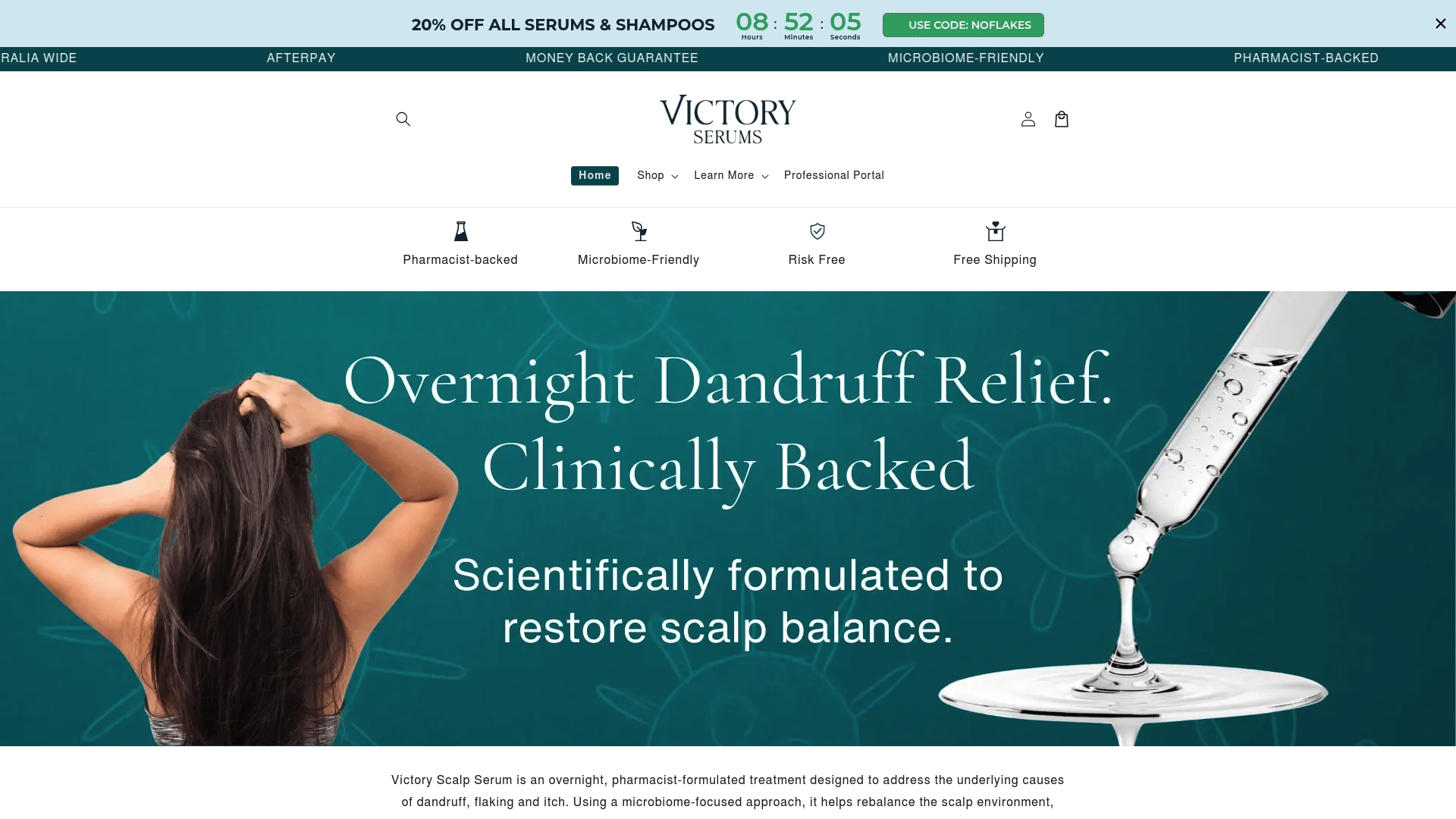
The microbiome-friendly moisturising scalp serum provides low pH maintenance support, whilst the conditioning shampoo cleanses without disrupting natural pH balance. Each product is formulated by pharmacists with microbiome preservation as the primary design goal.
Beyond products, Victory Serums offers comprehensive education through the free 12-week scalp health pathway. This structured programme integrates topical care with gut health optimisation and trigger identification, providing the complete framework for breaking chemical dependency.
Frequently asked questions
What is Victory Serums scalp care?
Victory Serums scalp care are products manufactured in Australia that prioritise microbiome balance through pH-aware formulations and minimal chemical intervention. These solutions focus on restoring natural scalp self-regulation rather than creating ongoing product dependency. They typically integrate topical treatments with holistic approaches addressing gut health and dietary triggers.
How do microbiome-friendly products differ from conventional anti-dandruff shampoos?
Microbiome-friendly products use low pH formulations designed for intermittent application, supporting beneficial microbe growth whilst controlling symptoms. Conventional anti-dandruff shampoos rely on daily chemical suppression through high pH formulations that damage the scalp microbiome indiscriminately. This fundamental difference determines whether you build long-term scalp resilience or remain dependent on daily treatment.
How often should I use anti-dandruff products?
Application frequency depends on product pH and your current scalp state. Higher pH intensive treatments should be used weekly or only during flare-ups to avoid microbiome disruption. Low pH maintenance products can be applied 2-3 times weekly initially, with frequency reduced progressively as your scalp rebalances. The goal is minimal intervention that maintains comfort rather than fixed daily schedules.
What role does pH play in scalp product formulation?
PH determines whether products support or disrupt your scalp microbiome. The natural scalp pH of 4.5 to 5.5 creates an environment where beneficial microbes thrive whilst pathogens struggle. Products formulated within this range support microbiome health, whilst higher pH formulations can disrupt microbial balance if used too frequently. Victory Serums microbiome-focused design pH specifically to match intended usage frequency.
Can holistic approaches really improve scalp health?
Yes. Scalp conditions such as dandruff and seborrheic dermatitis are widely understood to involve several interacting factors including microbial imbalance on the scalp, excess sebum production and disruption of the skin barrier. Because these conditions develop through multiple biological pathways, approaches that support overall scalp balance rather than focusing on a single symptom can often provide more stable long term improvement.
Holistic strategies typically combine targeted topical care with broader lifestyle considerations such as nutrition, gut health and reduced chemical exposure. This integrated perspective recognises that persistent scalp inflammation can sometimes reflect broader physiological imbalances rather than being solely a surface level issue.
By addressing both the local scalp environment and contributing internal factors, holistic approaches aim to restore scalp stability over time instead of relying only on repeated short term symptom suppression.
References
- Clavaud C et al. Dandruff is associated with disequilibrium in the proportion of the major bacterial and fungal populations colonizing the scalp. PLOS ONE. View study
- Saxena R et al. Comparison of healthy and dandruff scalp microbiome reveals the role of commensals in scalp health. Frontiers in Cellular and Infection Microbiology. View study
- Lambers H et al. Natural skin surface pH is on average below 5 which is beneficial for its resident flora. International Journal of Cosmetic Science. View study
- Borda LJ & Wikramanayake TC. Seborrheic dermatitis and dandruff: a comprehensive review. View study
- Warner RR et al. Dandruff has an altered stratum corneum ultrastructure that is improved with zinc pyrithione shampoo. Journal of the American Academy of Dermatology. View study
- Turner GA et al. Stratum corneum dysfunction in dandruff. International Journal of Cosmetic Science. View study
Recommended
- Why Scalp Care Differs from Hair Care – Microbiome Insights – Victory Serums
- Why Does My Scalp Itch? 50% Globally Face Microbiome Issues – Victory Serums
- Scalp Health and Hair – Why It Matters for Relief – Victory Serums
- How to Treat Dandruff Naturally for a Healthy Scalp – Victory Serums
- Discover the Best Toothpaste for Oral Microbiome: 10 Science‑Backed Pi – Stop Oral Care

Matt Heron is the founder of Victory Serums, an Australian microbiome focused scalp care brand specialising in severe dandruff, yeast imbalance and chronic scalp instability. With more than four decades of personal experience managing persistent dandruff and extensive study of scalp biology, skin pH and barrier function, he developed targeted scalp serums that work within minutes or as leave in treatments. His Reset, Rebalance and Restore approach challenges daily anti-dandruff shampoo dependence and is helping redefine the way chronic dandruff is treated.