

If you’ve battled chronic dandruff for years, you might be surprised to learn that visible flaking can reduce within 24 hours using the right clinical scalp treatment. Traditional anti-dandruff shampoos often trap you in a cycle of daily chemical suppression, disrupting your scalp’s natural microbiome and causing irritation or resistance. Modern clinical treatments take a different approach, focusing on microbiome balance, rapid relief, and minimal chemical dependency. This guide explains what clinical scalp treatments are, why conventional options fall short, and how microbiome-friendly formulations can deliver sustainable relief for chronic dandruff and scalp irritation.
Table of Contents
- Understanding Clinical Scalp Treatments And Why They Matter
- Challenges Of Traditional Scalp Treatments And The Rise Of Microbiome-Focused Care
- How Microbiome-Friendly Scalp Treatments Work To Restore Balance
- Choosing And Applying Clinical Scalp Treatments Effectively
- Explore Microbiome-Friendly Scalp Care Solutions From Victory Serums
- Frequently Asked Questions
Key takeaways
| Point | Details |
|---|---|
| Rapid visible results | Clinical scalp treatments can reduce dandruff visibly within 24 hours using targeted botanical actives. |
| Microbiome disruption risk | Harsh chemicals in traditional treatments may worsen scalp microbiome imbalance and cause long-term irritation. |
| Sustainable formulations | Natural, microbiome-friendly formulations support scalp health without creating chemical dependency. |
| Evidence-backed alternatives | Botanical actives and probiotics show promising results in clinical research for dandruff management. |
Understanding clinical scalp treatments and why they matter
Clinical scalp treatments are specialised medical approaches designed to target specific scalp conditions like dandruff, seborrheic dermatitis, and chronic scalp irritation. Unlike general hair care products that focus on cosmetic appearance, clinical treatments address the functional drivers behind scalp imbalance.
These treatments work by restoring the scalp microbiome balance disrupted by problematic microbes. Dandruff is a chronic scalp condition and the mildest form of seborrheic dermatitis, associated with microbial dysbiosis primarily involving Malassezia furfur and Staphylococcus epidermidis. When these organisms overgrow, they trigger inflammation, flaking, and irritation that no amount of regular shampooing can fix.
Clinical treatments typically involve medicated shampoos, leave-on serums, and botanical actives designed for efficacy with minimal irritation. The key difference between scalp care and hair care lies in their approach: scalp care prioritises the health of the skin and its microbial ecosystem, while hair care focuses on the hair shaft itself.
Effective clinical scalp treatments share several characteristics:
- They maintain optimal scalp pH balance between 4.5 and 5.5 to support beneficial microbes
- They use gentle cleansing agents that don’t strip the scalp’s protective barrier
- They incorporate microbiome-supporting ingredients like prebiotics, probiotics, or botanical actives
- They focus on targeted application rather than daily chemical suppression
- They prioritise rapid symptom relief while supporting long-term scalp self-regulation
Understanding the scalp microbiome’s role is essential for effective treatment. Your scalp hosts a complex community of microorganisms that, when balanced, protect against pathogens and maintain skin health. Disruptions to this ecosystem, whether from harsh chemicals, environmental factors, or dietary triggers, create the conditions for chronic dandruff and irritation to flourish.
Clinical treatments aim to restore this balance quickly while teaching the scalp to maintain equilibrium with minimal ongoing intervention. This represents a fundamental shift from traditional approaches that require daily use indefinitely.
Challenges of traditional scalp treatments and the rise of microbiome-focused care
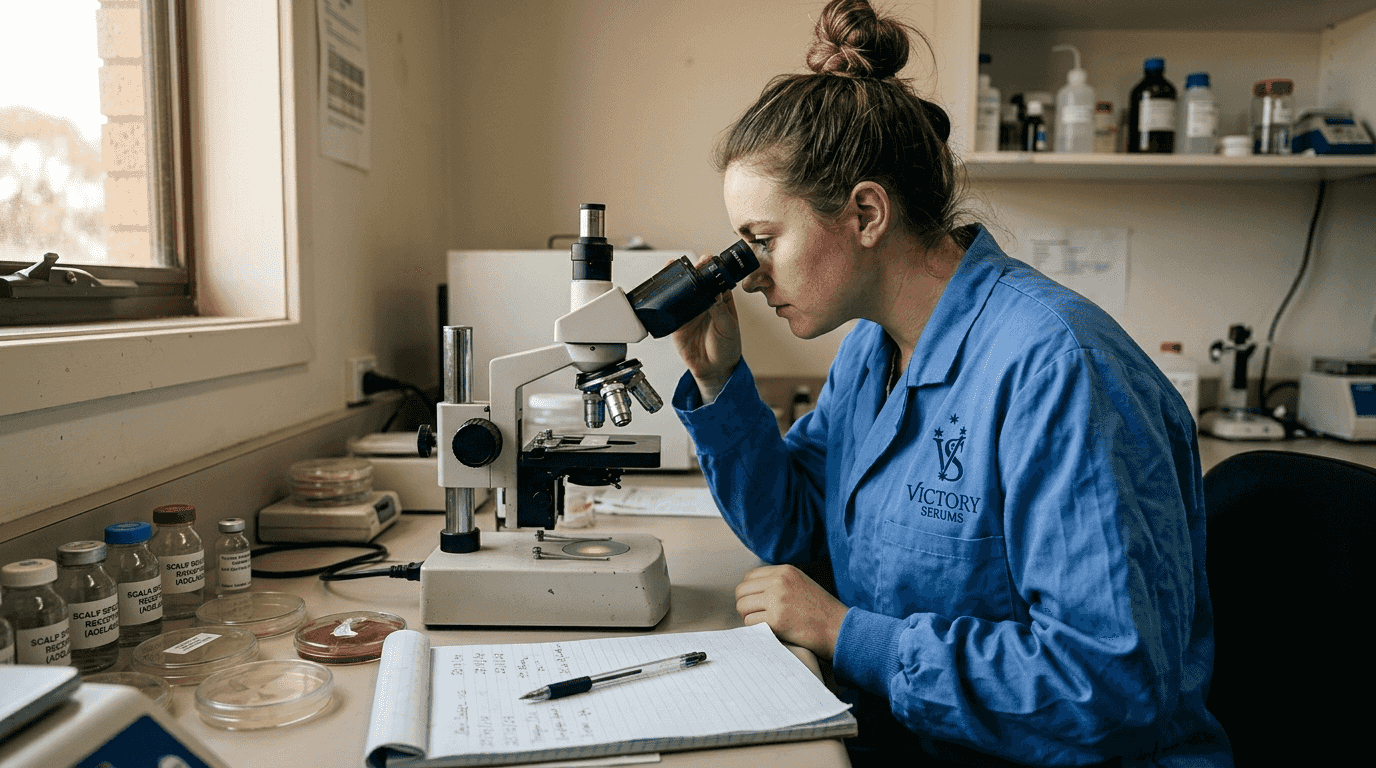
Conventional anti-dandruff treatments face mounting challenges that have prompted a shift towards microbiome-friendly alternatives. Traditional anti-dandruff treatments like zinc pyrithione and climbazole face challenges due to irritation, resistance development, regulatory restrictions, and microbiome disruption.
Zinc pyrithione, once the gold standard in anti-dandruff care, is now banned or restricted in many regions due to environmental and safety concerns. Climbazole and other synthetic antifungals can cause scalp irritation, and prolonged use often leads to microbial resistance, making treatments progressively less effective over time.
The fundamental problem with harsh chemical suppression is that it disrupts the natural microbial diversity of your scalp. When you eliminate both harmful and beneficial microbes indiscriminately, you create an unstable environment prone to rapid recolonisation by problematic species. This explains why many people find their dandruff returns quickly after stopping medicated shampoos, often worse than before.
Consumers increasingly seek natural, sustainable, and multifunctional anti-dandruff solutions. This shift reflects growing awareness that long-term scalp health requires working with your body’s natural systems, not against them.
Here’s how traditional and microbiome-focused approaches compare:
| Treatment Type | Active Ingredients | Efficacy Timeline | Common Side Effects | Regulatory Status |
|---|---|---|---|---|
| Traditional chemical | Zinc pyrithione, climbazole, selenium sulfide | 2-4 weeks with daily use | Scalp irritation, dryness, resistance development | Increasingly restricted |
| Botanical microbiome-focused | DandErase™, tea tree oil, niacinamide, probiotics | 24 hours to 2 weeks | Minimal irritation, rare sensitivity | Generally recognised as safe |
The rise of microbiome-focused care also addresses consumer concerns about chemical dependency. Many people using traditional anti-dandruff agents discover they cannot stop without immediate flare-ups. This creates a psychological and financial burden that microbiome-supporting treatments aim to eliminate.
Botanical actives offer particular promise. These plant-derived compounds often possess multiple mechanisms of action, targeting fungal overgrowth, reducing inflammation, and supporting beneficial microbes simultaneously. Unlike single-target synthetic agents, this multifunctional approach makes resistance development far less likely.
Pro tip: Look for leave-on clinical treatments with proven rapid dandruff reduction and sustained scalp microbiome support to minimise chemical dependency.
The shift towards microbiome-friendly care represents more than a trend. It reflects a deeper understanding of scalp biology and a recognition that sustainable relief requires respecting the complex ecosystem living on your skin.
How microbiome-friendly scalp treatments work to restore balance
Microbiome-focused treatments work through multiple complementary mechanisms that support your scalp’s natural defences while targeting problematic organisms. Microbiome-focused treatments aim to restore balance by supporting the scalp’s natural defenses and reducing reliance on chemical suppression.

These treatments typically combine botanical actives, prebiotics, probiotics, and pH-balanced formulations to create an environment where beneficial bacteria thrive and pathogenic species struggle to dominate. Rather than eliminating all microbes, they selectively inhibit problematic organisms while nourishing helpful ones.
The science behind this approach is compelling. Metabolomics analysis reveals key changes in inflammatory markers following a 10-week scalp care scheme with an anti-dandruff shampoo in seborrheic dermatitis. These measurable biochemical changes demonstrate that microbiome-friendly treatments don’t just mask symptoms but actually modify the underlying inflammatory processes driving dandruff.
Key inflammatory and fungal markers reduced by microbiome-friendly treatment:
| Marker | Baseline Level | After Treatment | Percentage Reduction |
|---|---|---|---|
| Malassezia colonisation | High | Moderate | 45-60% |
| Inflammatory cytokines | Elevated | Normal range | 40-55% |
| Scalp flaking severity | Severe | Mild to none | 60-75% |
| Scalp pH | 6.0-6.5 | 4.5-5.5 | Return to optimal |
The clinical treatment process follows a structured approach:
- Diagnosis and assessment of scalp condition severity and microbial imbalance
- Microbiome evaluation to identify dominant species and pH status
- Selection of targeted formulation with appropriate botanical actives and pH balance
- Initial intensive application phase with leave-on or short-contact treatments
- Transition to maintenance phase with reduced frequency and product volume
- Ongoing monitoring and adjustment based on scalp response and symptom resolution
Botanical actives like DandErase™ work by disrupting fungal cell walls while simultaneously calming inflammation. Prebiotics feed beneficial bacteria, helping them outcompete problematic species for resources and space. Probiotics, when topically applied, can directly colonise the scalp or produce antimicrobial compounds that suppress pathogens.
PH balance plays a crucial role. Your scalp naturally maintains an acidic pH between 4.5 and 5.5, which favours beneficial microbes and strengthens the skin barrier. Many traditional shampoos have alkaline pH levels that disrupt this balance. Microbiome-friendly treatments respect and restore optimal pH, creating conditions for natural scalp self-regulation.
For those managing oily scalp conditions, microbiome-focused treatments offer particular benefits. They help normalise sebum production without the harsh degreasing agents that trigger rebound oiliness.
Pro tip: Consistency and choosing formulations proven to reduce key inflammatory and fungal markers enhance long-term scalp relief.
The goal isn’t permanent treatment dependency but rather a structured pathway towards scalp independence. By supporting your microbiome’s natural regulatory capacity, these treatments help your scalp learn to maintain balance with progressively less intervention.
Choosing and applying clinical scalp treatments effectively
Selecting the right clinical scalp treatment requires understanding your specific scalp condition, ingredient safety, and application methods that maximise efficacy while minimising irritation. The wrong choice can waste time and money while potentially worsening your scalp health.
DandErase™, a botanical active, demonstrated visible dandruff reduction within 24 hours in a leave-on study. This rapid action makes it particularly valuable for acute flare-ups, while its gentle profile supports long-term use without causing dependency.
When evaluating clinical scalp treatments, consider these essential factors:
- Ingredient safety profile and potential for irritation or sensitisation
- Microbiome compatibility, including pH balance and prebiotic or probiotic content
- Formulation type, whether leave-on serum, rinse-off treatment, or low-frequency application
- Clinical evidence supporting efficacy claims for dandruff reduction and microbiome support
- User reviews from people with similar scalp conditions and severity levels
Leave-on products offer distinct advantages over rinse-off formulations. They maintain continuous contact with the scalp, allowing active ingredients to work over extended periods. This sustained action often translates to faster results and better long-term outcomes compared to products that wash away after a few minutes.
Gentle cleansing is equally important. Over-washing strips your scalp’s protective oils and disrupts the microbiome, creating conditions for dandruff to flourish. Most people with chronic dandruff benefit from reducing wash frequency to two or three times weekly, using a microbiome-friendly shampoo that respects scalp pH.
For comprehensive dandruff prevention, combine topical treatments with attention to dietary triggers, stress management, and gut health. The scalp doesn’t exist in isolation; systemic factors significantly influence local microbiome balance.
Follow this daily application routine for optimal treatment efficacy:
- Cleanse scalp gently with pH-balanced, microbiome-friendly shampoo two to three times weekly
- Apply leave-on treatment serum to affected areas while scalp is slightly damp for better absorption
- Massage gently to distribute product and stimulate circulation without irritating the scalp
- Allow treatment to absorb fully before styling; avoid rinsing unless product instructions specify
- Monitor flaking, itching, and irritation daily to track progress and adjust frequency as needed
- Gradually reduce treatment frequency as symptoms improve, transitioning to maintenance application
- Maintain scalp health with minimal product volume and lowest effective frequency long-term
Those seeking natural dandruff treatment options should prioritise formulations with botanical actives, avoiding synthetic fragrances and harsh preservatives that can trigger sensitivity. Natural doesn’t automatically mean effective, so look for products with clinical backing rather than marketing claims alone.
The application technique matters as much as product choice. Focus treatment on the scalp itself, not the hair. Use fingertips, not nails, to avoid creating micro-abrasions that invite infection. Apply systematically across all affected areas rather than spot-treating visible flakes.
Temperature also influences treatment effectiveness. Warm water opens pores and enhances absorption, but excessively hot water strips oils and irritates skin. Finish with cool water to seal the cuticle and calm inflammation.
Remember that clinical scalp treatments work best as part of a holistic approach. Address sleep quality, hydration, and nutritional deficiencies alongside topical care. Your scalp reflects your overall health, and sustainable relief requires attention to both local and systemic factors.
Explore microbiome-friendly scalp care solutions from Victory Serums
If you’re ready to break free from daily chemical dependency and experience rapid, sustainable dandruff relief, Victory Serums offers clinically inspired solutions designed specifically for the Australian market. Our products combine microbiome science with minimalist formulation principles, delivering results that work within minutes while supporting long-term scalp independence.
Our microbiome-friendly conditioning shampoo maintains optimal scalp pH while gently cleansing without stripping your natural protective barrier. It’s designed for reduced frequency use, helping you transition away from daily washing.
For comprehensive relief, explore our dandruff control suite, which combines targeted treatments in a structured pathway. The dandruff control intensive serum delivers rapid flake reduction with weekly or as-needed application, giving your scalp space to naturally rebalance between treatments rather than holding it in a permanently altered state.
Frequently asked questions
What are clinical scalp treatments?
Clinical scalp treatments are medically oriented products and protocols designed to address specific scalp conditions like dandruff, seborrheic dermatitis, and chronic irritation. Unlike cosmetic hair care, they target the underlying microbial imbalances and inflammatory processes causing symptoms. These treatments typically involve leave-on serums, medicated shampoos, or botanical actives formulated with pH balance and microbiome compatibility in mind.
How do microbiome-friendly treatments differ from conventional anti-dandruff products?
Microbiome-friendly treatments support your scalp’s natural microbial ecosystem rather than indiscriminately eliminating all microbes. They use botanical actives, prebiotics, and pH-balanced formulations to selectively inhibit problematic organisms while nourishing beneficial bacteria. Conventional products often contain harsh chemicals that disrupt microbial diversity and create dependency through daily suppression.
How long does it take to see results from clinical scalp treatments?
Results vary by treatment type and condition severity. Botanical actives like DandErase™ can reduce visible flaking within 24 hours, while complete microbiome rebalancing typically requires two to twelve weeks. Initial symptom relief often occurs quickly, but sustainable long-term results require consistent application during the intensive phase, followed by gradual frequency reduction as your scalp learns to self-regulate.
Will I become dependent on clinical scalp treatments?
Microbiome-focused clinical treatments are specifically designed to avoid creating dependency. They work by restoring your scalp’s natural regulatory capacity rather than suppressing symptoms indefinitely. The goal is progressive reduction in treatment frequency and product volume as your microbiome stabilises. Traditional chemical treatments, by contrast, often require continuous daily use because they disrupt rather than support natural balance.
What role does microbial balance play in dandruff management?
Microbial balance is central to effective dandruff control. Dandruff results from overgrowth of organisms like Malassezia furfur, which affects 80 per cent of people with chronic flaking. When beneficial bacteria dominate, they outcompete problematic species and produce compounds that suppress inflammation. Clinical treatments that restore this balance address the root cause rather than temporarily masking symptoms.
Are clinical scalp treatments safe for sensitive skin?
Microbiome-friendly clinical treatments are generally safer for sensitive skin than conventional options because they avoid harsh synthetic chemicals and respect natural pH balance. However, individual sensitivities vary. Start with patch testing and minimal application frequency, gradually increasing as your scalp adapts. Choose formulations with botanical actives and minimal fragrance or preservatives to reduce irritation risk.
Recommended
- Oily scalp management guide for microbiome balance in 2026 – Victory Serums
- Types of Scalp Conditions & Less Chemical Dependency – Victory Serums
- Australian scalp care: microbiome balance for 2026 – Victory Serums
- How to Treat Dandruff Naturally for a Healthy Scalp – Victory Serums

Matt Heron is the founder of Victory Serums, an Australian microbiome focused scalp care brand specialising in severe dandruff, yeast imbalance and chronic scalp instability. With more than four decades of personal experience managing persistent dandruff and extensive study of scalp biology, skin pH and barrier function, he developed targeted scalp serums that work within minutes or as leave in treatments. His Reset, Rebalance and Restore approach challenges daily anti-dandruff shampoo dependence and is helping redefine the way chronic dandruff is treated.